
The 6 key metrics that really matter in a consignment store

If you run a consignment store, you know it's not just about selling nice things. You also need to understand which numbers behind it really matter. Looking only at your revenue tells just part of the story.
In this article I walk you through the key metrics that make the difference. Think margins, sell-through speed, which brands perform well, and even which consignors actually bring you the most value.
1. Product margins - key metrics for consignment stores
Margin is your most important yardstick. Store owners often think the commission they keep is their profit. But that's not right: you also need to factor in your fixed costs per product.
- Gross margin = selling price – payout to the consignor
- Net margin = gross margin – allocated costs per product
👉 Smart cost calculation:Say your fixed costs (rent, staff, marketing, software) are €6,000 per month. If you sell 600 products that month, your cost per product is €6,000 ÷ 600 = €10 per item.
Example:
- Bag selling price: €100
- Consignor receives: €60
- Gross margin: €40
- Cost per product: €10
- Net margin = €30
So you see straight away that you're not earning €40, but actually €30.
2. Sell Through Rate (STR)
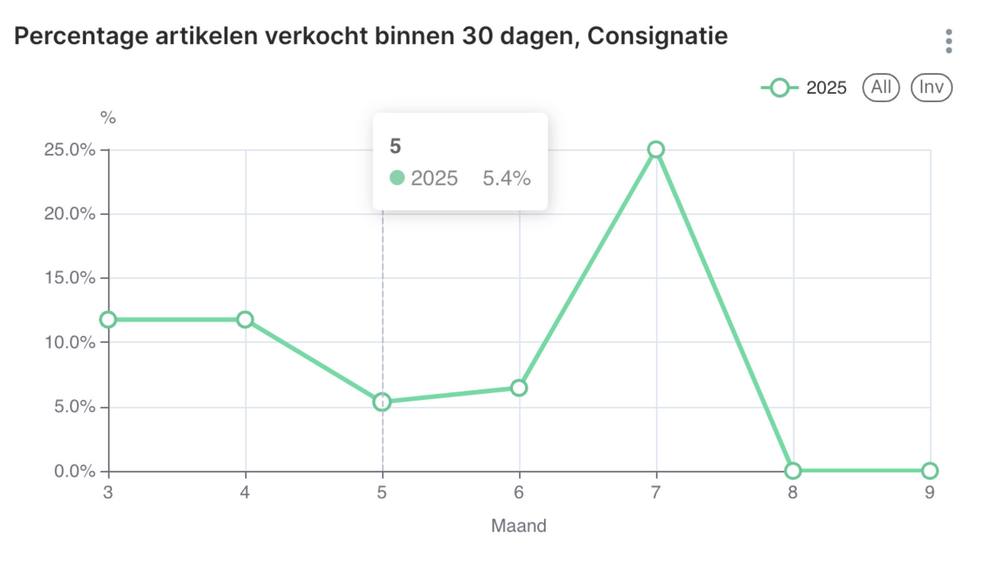
The sell through rate (STR) tells you everything about how quickly your stock turns over. You calculate it like this:
STR = (number of products sold ÷ number consigned) × 100%
An example: you take in 200 items in March. After 30 days you've sold 120. Your STR(30) is then 60%.
It's smart to measure this at:
- 7 days → what flies out the door immediately?
- 30 days → what is your healthy turnaround time?
- 90 days → which items hang around too long?
A high STR means your collection is on point. Is your STR low? Then it's often down to pricing, quality or the wrong brands.
3. Which brands, categories and price segments perform well in your consignment store
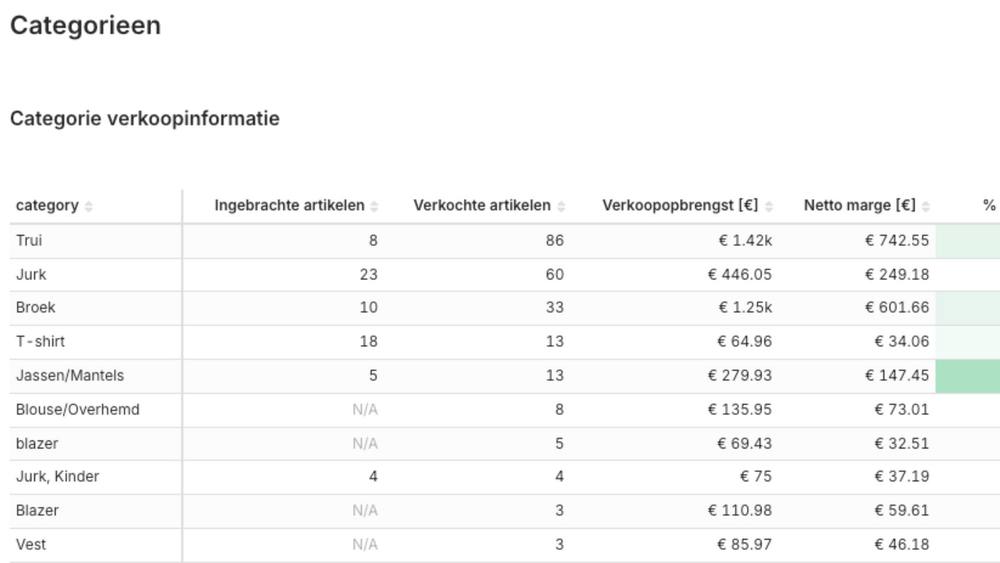
Not every product is equal. Some brands sell like hot cakes, others linger. The same goes for categories and price ranges.
- Brands: luxury brands bring higher margins but often sell more slowly. Mid-range brands usually go faster.
- Categories: shoes and bags often perform better than small accessories.
- Price segments: products between €30 and €80 often turn over faster, while items above €200 move more slowly but earn more per piece.
👉 Tip: track monthly which category sells fastest and has the highest net margin. That way you can steer your intake in a targeted way.
4. Consignor performance
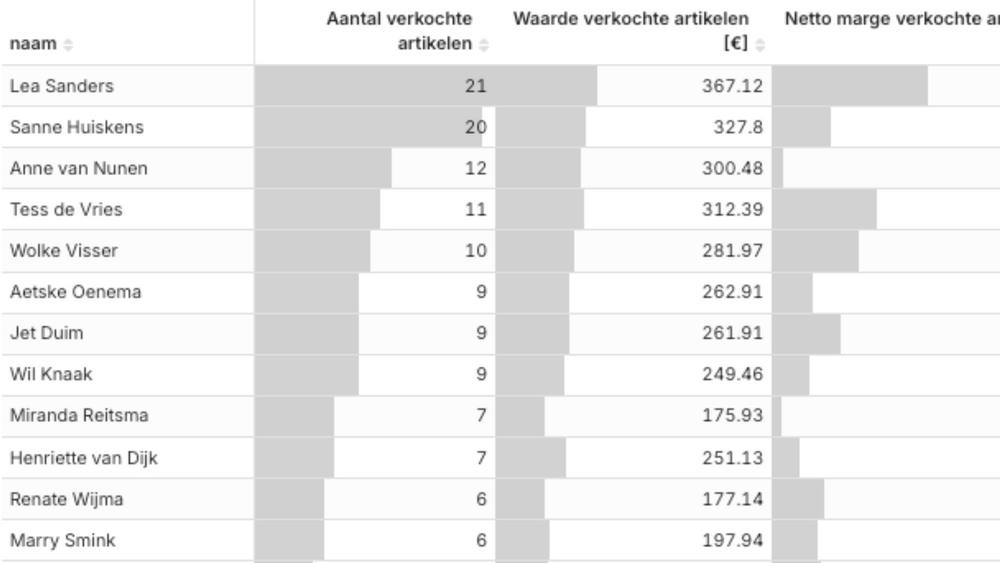
It's not just products that differ, your consignors do too. Some bring top products that sell quickly, others mainly deliver items that sit on the shelf.
That's why it's smart to keep track of:
- Which consignors generate the highest revenue.
- Which consignors have structurally low sell-through.
With that info you can reward your top performers (for example with a slightly higher percentage) or call them when you have space in the store, and give others clear criteria. That's how you improve the quality of your stock step by step.
5. New consignors
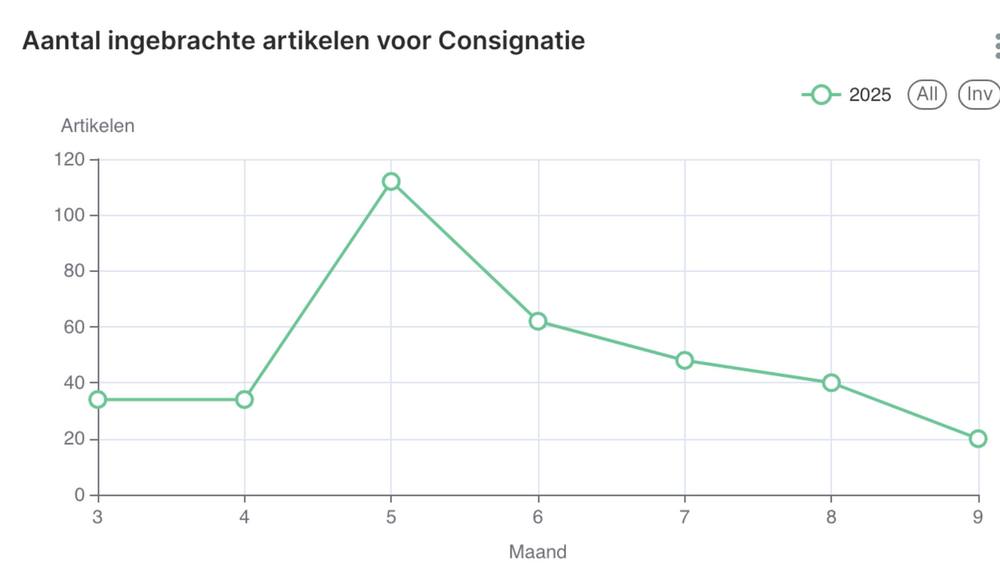
New consignors are the fuel for growth. The number of new consignors per month or quarter says a lot about how attractive your store is. We also see a clear correlation between the volume of consignments and revenue. More consignments = more turnover = more revenue.
But note: it's not just about numbers, but also quality. Are you attracting consignors who fit your target audience and price point, or not?
👉 Extra tip: set up a referral programme. Reward regular consignors who bring in new people. That often works better than expensive marketing.
6. Revenue growth
Revenue growth obviously remains important. But note: high revenue doesn't automatically mean high profit. That's why you always look at revenue in combination with margins.
Useful to track:
- Month-on-month growth → spot trends quickly.
- Year-on-year growth → see structural progress.
- Revenue per category → discover where the real profit is.
👉 Example: a store saw 20% revenue growth in a year, but net margin had fallen. Only when they started steering more closely on margins and STR did profit really grow.
- store sales revenue per month
Frequently asked questions (FAQ)
1. What are the most important key metrics for a consignment store?Margins, sell through rate and the performance of brands/consignors.
2. How often should I measure my key metrics?Monthly is a must, weekly gives you a faster grip.
3. How can I increase my sell through rate?By adjusting your prices faster, running seasonal collections and using marketing campaigns smartly.
4. How do I improve my margins?By attracting premium items, cutting unnecessary costs and setting up pricing more smartly.
5. What do I do with underperforming consignors?Be transparent and give feedback. Explain what does sell and set clear criteria.
6. Which tools can I use?Inventory and POS systems such as Lightspeed or ResaleAI give instant insight. To start, Excel can be enough.
Conclusion
Running a successful consignment store isn't just about selling things, it's about understanding the right key metrics.
If you structurally track margins, sell through rate, brand and consignor performance, new inflow and revenue growth, you make better decisions. You don't just know how much you sell, but above all what you really earn on.