
How Lemon Hill makes better intake and sales decisions after switching to Cirquly consignment software
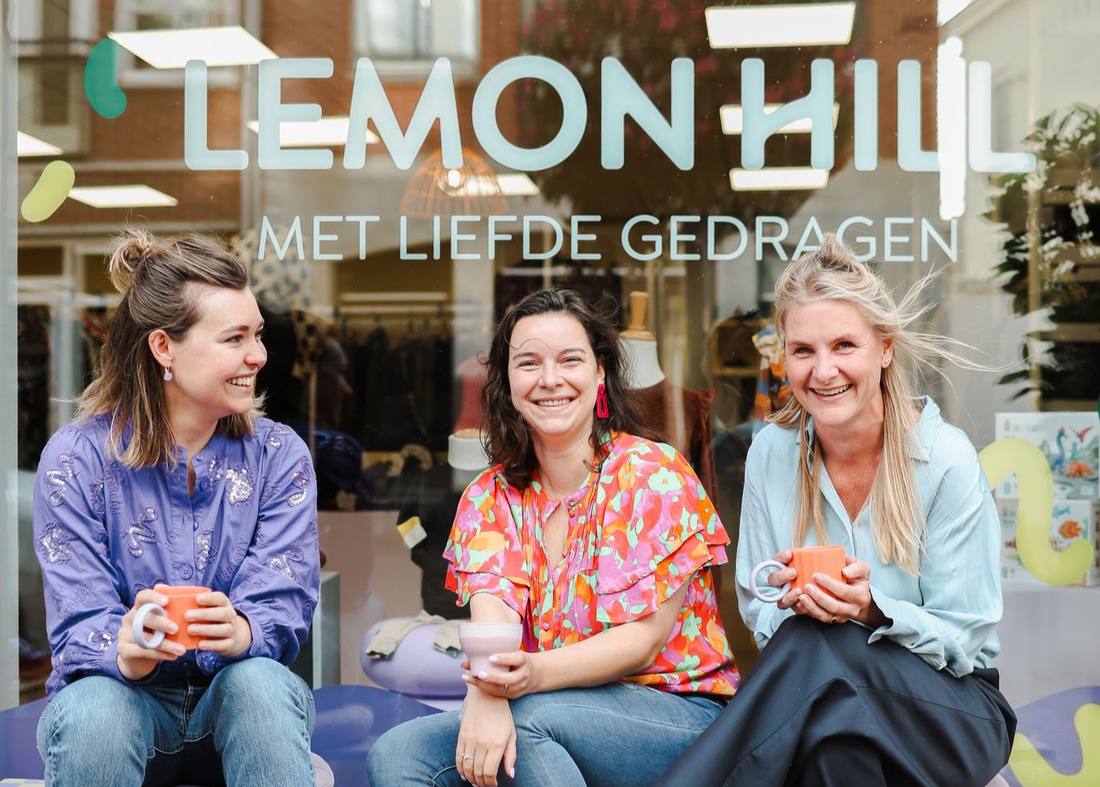
"If you're hesitant about Cirquly consignment software because of the cost: thanks to the system's efficiency and speed, I'm actually cheaper off on the bottom line."
Lemon Hill is a second-hand store with women's, men's and children's clothing, working with both consignment and its own purchased stock. Before Cirquly consignment software, they ran entirely on gut feeling, with no insight into category data, margin or sell-through speed. It was hard to steer intake and insight. Now that they work with Cirquly consignment software, they make better decisions based on data, new employees are onboarded within half a day, and they buy smarter.
Steering on gut feeling and the blind spots that created
Before Cirquly, Lianne of Lemon Hill looked at revenue daily and compared it with the year before. That was it. No category overview, no insight into which brands or price ranges sold best, no data on which consignors consistently brought in items that sold well.
"I thought someone was a good customer because they had a lot of outstanding balance. But that's definitely not a watertight method. In Winkeladmin you could see the customer return rate: for example, someone could come in with a load of junk, we'd accept 1 item, it sells and you immediately have a return of 100%. That's not a good picture of how good a customer really is. We'd much rather have customers who bring in lots of nice things, almost all of which we accept and a large share of which we sell."
Product range decisions were made based on experience and gut feeling. Brands that didn't sell were phased out, but only after they had been sitting long enough to stand out. Categories were barely tracked.
"We weren't thinking about categories at all. When you do everything on your own you still know it, but with staff you really need more overview."
What changed with Cirquly
Steering on data instead of gut feeling
Where Lemon Hill used to have only revenue figures, they now also look at product categories, sell-through speed and price ranges. The insights are concrete and immediately usable.
An example: they saw that trousers were selling less well. They looked at what was on the rails, drew their conclusions and stopped accepting skinny trousers. Previously they would have gone through that process on gut feeling; now there's data behind it.
"We're definitely moving towards steering more and more on category."
Better intake and purchasing decisions
The insights from Cirquly directly influence what Lemon Hill takes in and buys. A concrete example: a jewelry brand that was bought regularly actually generated hardly any revenue. Without data, another €900 would have been spent on it.
"Then we switched to Cirquly and saw that we had to stop with that brand completely. Otherwise I would have bought another €900 worth and sold nothing."
They also discovered that the price range between €20 and €50 generates by far the most revenue and items sold. This insight now directly drives intake: not too many expensive items, because the turnover rate is too low. Items that used to be priced at €19.95 now go to €24.95.
"Since I know we sell better between €20 and €50, I deliberately price items at €24.95."
The same goes for toys: the price range between €10 and €20 sells best. That now drives purchasing decisions.
Faster sell-through thanks to better placement
Lemon Hill now sees that many items sell within 14 days of arrival. That has led to an adjustment: new items are deliberately put in the spotlight in the store.
A half-day onboarding period
One of the most concrete effects: Lemon Hill switched to Cirquly in August, and a new employee started in early September. Onboarding took half a day.
"With the previous system, Winkeladmin, I often got calls asking 'how does this work again'. Not anymore. Even my mother could work the POS."
The system also ensures better alignment within the team on pricing and intake: everyone works from the same data and the same recommendations.
"Alignment in the team on pricing and intake. For me, that's the biggest added value."
Own purchasing easier than ever
Since switching to Cirquly, Lemon Hill has also started doing more of its own purchasing, something that was a huge job with Winkeladmin because of getting all the products into the system
"Purchasing used to be a massive job. Now it's so easy because you can just scan in products with their own EAN code. I couldn't imagine having to put our current volume of purchased stock into Winkeladmin."
In summary
| With Winkeladmin | With Cirquly |
|---|---|
| Only checking daily revenue | Categories, price ranges and sell-through speed at a glance |
| Steering on gut feeling and experience | Decisions based on data |
| Phasing out brands when it's already too late | Stopping poorly performing categories in time |
| Intake based on experience | Intake driven by category data and sell-through speed |
| New employee: long onboarding period | New employee: half-day onboarding |
| Own purchasing: time-consuming | Own purchasing: quick and easy via EAN scan |
| Hard to align as a team | Everyone works from the same data |
What Lemon Hill would say to anyone in doubt
"Why are you hesitating? Cirquly is more expensive, but you easily earn it back with how quickly and easily everything goes. Are you aware of how much time you're losing now? If you're going to grow substantially and hire more staff, this is much smarter."
Do you also run a second-hand store without the right data?
Then this probably sounds familiar: decisions based on gut feeling, blind spots in your product range, and too much time spent on things that could be automated.
Cirquly gives you the overview to take in stock smarter, buy better and get your team up to speed quickly.