
Consignors are the engine of your store: how to keep your top 20 and grow with new ones

Introduction: why consignors matter more than customers
In a traditional retail store, everything revolves around buying and selling. But in a consignment store the dynamic is different: you don't buy stock, you depend on consignors. They supply the goods, clothing, shoes or accessories you sell.
So the success of your store isn't just determined by how many customers walk in, but above all by the quality, continuity and loyalty of your consignors. Without them you have no stock, no variety and no shopping experience.
That's why it's crucial to retain your best consignors (often your top 20) while continuously attracting new consignors. In this blog you'll discover why that balance matters so much and how to approach it in practice.
Why your top 20 consignors are indispensable
Experience shows that a small percentage of your consignors is responsible for a large share of your revenue. This is also known as the Pareto principle (80/20 rule): 20% of your consignors can account for 80% of your sales.
How much value do they represent?
Say you have 200 active consignors. Chances are that 20 to 40 of them bring in the best brands and best-selling items. These are the people who provide:
- High quality (brands that sell faster).
- Regular supply (always new items in the store).
- Stable revenue (a reliable basis for your store results).
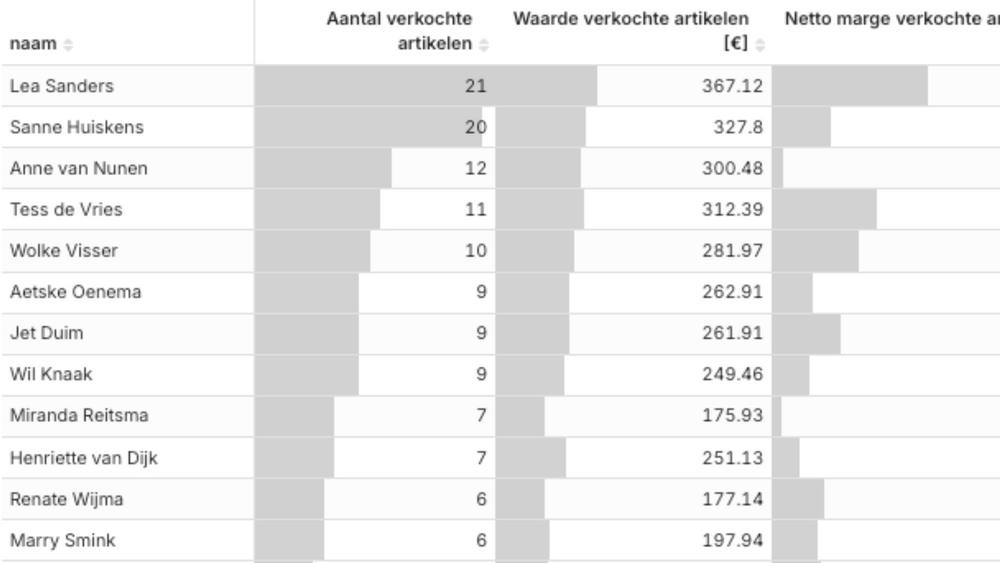
How do you spot them in your data?
- Look at the total revenue per consignor over the past 6-12 months.
- Analyse their sell-through rate: what percentage of the clothing they consign actually sells?
- Look for consistency: does someone come monthly or only occasionally?
By laying this out clearly (for example in Excel or in your consignment software), you get an immediate view of your top 20.
How do you retain your top 20?
These aren't just suppliers, they're your VIPs. Treat them that way. Possible strategies:
- Personal communication: send a thank-you email or a WhatsApp when their clothes sell quickly.
- Rewards: give them discounts on purchases, exclusive drop-off moments or small gifts.
- Events: invite your top 20 to a special evening (for example a preview of a new collection).
By giving them attention, they stay loyal and often bring in even better quality.
The risk of churn: why you always need new consignors
Even your most loyal consignor may drop out at some point. Maybe they move, their style changes, or they decide to sell on Vinted themselves.
A worked example
Say you have 100 active consignors.
- Every year an average of 20% drop out → that's 20 fewer consignors.
- To stay stable, you need to attract at least 20 new consignors per year.
- Want to grow? Then you need even more. For example 30 or 40.
This shows that without a steady inflow, your store shrinks by itself.
How to attract new consignors (practical strategies)
Finding new consignors doesn't have to be hard, as long as you give it structural attention. Here are 6 effective ways:
1. Use social media
- Share consignor success stories ("Mrs Jansen brought in 5 items last week, and 3 have already sold!").
- Regularly post a call for new consignments ("We're looking for autumn coats from good brands!").
- Use videos and reels to show how easy the process is.
2. Local partnerships
Partner with:
- Hairdressers, beauty salons or coffee bars → leave flyers or run promotions.
- Sports clubs or associations → think second-hand sportswear.
- Local events → a stand explaining how consigning works.
3. Special intake weeks
Organise a "Consignment week" with extra perks, such as:
- No intake fees.
- Extra fast payout.
- A chance to win a gift card for everyone who brings in items.
4. Encourage word of mouth
Your current consignors are your best ambassadors.
- Offer a referral bonus: existing consignors who bring someone along get a reward.
- Share flyers they can easily pass on.
5. Communicate clear terms
Many people find consignment complicated. Make it simple:
- An explanation in 3 steps (consign, sell, payout).
- Transparent agreements on percentages and periods.
- A short FAQ on your website.
6. Set measurable goals
For example:
- "5 new consignors every month."
- Track this in an overview, so you know whether you're growing or need to adjust.
The right balance: loyal top performers + a steady inflow
A healthy consignment store has a dual strategy:
- Retaining your top 20 consignors → ensures continuity and quality.
- Structural growth of new consignors → offsets natural churn and drives growth.
Think of it as an engine: the top 20 is your fuel, and new consignors are the acceleration. Without both, your store will stall sooner or later.
Frequently asked questions (FAQ)
1. How many consignors does an average consignment store need?It varies per store, but often between 100 and 300 active consignors.
2. How often should I analyse my top 20?At least every quarter. That way you spot trends and changes in time.
3. What can I do if my top consignor suddenly stops?Try to spot this early and invest extra effort in new consignors to absorb the blow.
4. How do I reward my best consignors without spending much?A personal card, a small gift or an exclusive preview evening often works better than expensive rewards.
5. How do I attract young consignors?Be active on Instagram and TikTok and show that consigning is just as easy as selling on Vinted, but without the hassle.
6. What if I have too many consignors and no more space?Tighten your intake: set quality requirements and be more selective. That also raises the quality of your range.
Conclusion
Consignors are the engine of your consignment store. Without them you have no stock and no business.
- Your top 20 consignors provide the stable base of your revenue.
- But because an average of 20% of your consignors drop out each year, a steady inflow of new consignors is essential.
With a smart mix of relationship management, marketing and clear communication you build a store that keeps growing, stays fresh for customers and is sustainably successful.
👉 In short: put your consignors at the centre and you build a strong, profitable consignment concept.